 Email: info@sientechnology.com
 HOME
HOME
Challenges and Solutions of Manual Handling
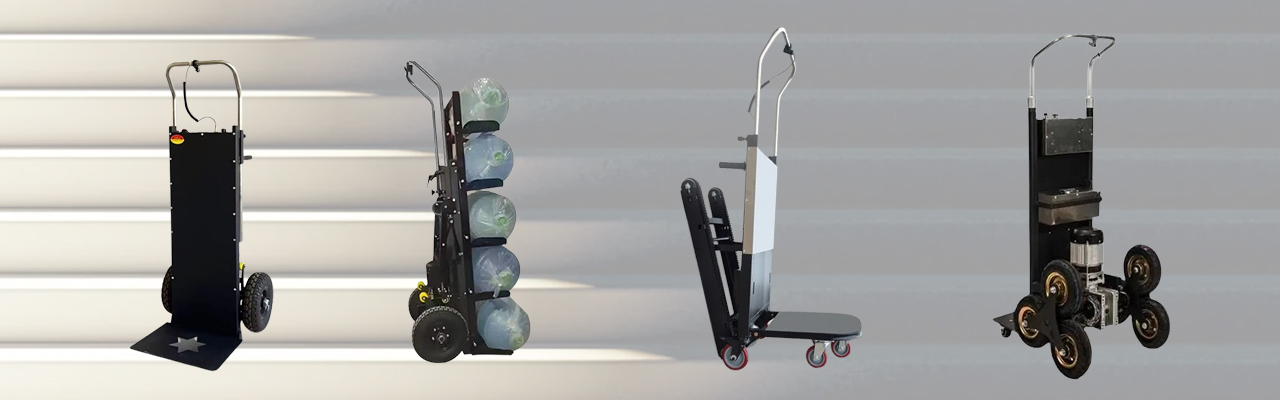
Manual handling remains a major problem for many industries. Whether it’s logistics and distribution, appliance installation, or warehouse management, the drawbacks of manual handling become apparent whenever heavy objects are moved up and down stairs or over long distances. Manual handling not only affects work efficiency but also poses safety hazards and incurs additional labor costs. Electric stair climbers are gradually replacing traditional manual labor, becoming a core tool for various industries to improve handling efficiency and reduce safety risks.
Frequently Asked Questions
Worker Fatigue:
Manual handling, especially the handling of heavy objects and the carrying of items up and down stairs, requires workers to exert a significant amount of physical strength. Worker fatigue leads to decreased attendance and reduced work efficiency, indirectly increasing labor costs.
Workplace Injuries:
Accidents such as slipping heavy objects, falling down stairs, and back sprains are frequent during manual handling. Back injuries are the most common type of workplace injury. These accidents not only cause physical harm and economic losses to workers but also expose companies to substantial workers’ compensation claims, downtime losses, and compliance penalties. The risk of workplace injuries is doubled, especially in older buildings without elevators or in warehouse lofts.
Inefficiency:
The efficiency of manual handling is affected by various factors, including physical strength, mood, and environment, resulting in extremely poor stability. A worker can only carry a limited amount of goods at a time, and the speed is even slower when going up and down stairs. When dealing with home appliances, building materials, or barrelled goods, it may even require 2-3 workers to work together to complete the task, which greatly increases the labor input and the burden on workers. This cannot meet the needs of enterprises for large-scale and efficient handling. The inefficiency of manual handling will directly affect customer experience and enterprise competitiveness.
How Stair Climbing Machines Help:
Reducing Physical Exertion:
Stair climbing machines, driven by electricity and supported by mechanical means, completely replace the core pressure of manually carrying heavy objects, fundamentally reducing the physical exertion of workers. They easily carry heavy loads (typically 100-400kg), and workers only need to control the direction and speed of the machine, without exerting force, avoiding excessive muscle strain and physical exhaustion. Even during long periods of operation, workers do not experience excessive fatigue, effectively protecting their back and joint health, while allowing them to work continuously and efficiently.
Improving Workflow:
The flexible design of stair climbing machines adapts to various scenarios, whether it’s narrow stairwells, old buildings, or complex environments such as warehouses and construction sites, allowing for flexible movement and completely solving the pain point of traditional handling tools being unable to move up and down stairs. The carrying efficiency of one stair climbing machine is equivalent to the collaborative efficiency of 2-3 workers. Without the need for multiple people, a single person can complete operations such as moving heavy objects up and down stairs and long-distance transport, significantly reducing manpower input. For example, appliance installation teams using stair climbers can reduce a task that would normally take two people 15 minutes to carry upstairs to a single person in just 5 minutes, significantly improving delivery and installation efficiency.
Improved Safety:
The core design of stair climbers revolves around safety, fundamentally reducing the risk of workplace injuries associated with manual handling. The stair climber’s mechanical structure evenly distributes the pressure of heavy objects, avoiding injuries such as twists and falls caused by improper force or instability during manual handling. Furthermore, stair climbers are simple and easy to operate; workers can learn to use them after minimal training, preventing safety hazards caused by operational errors and effectively reducing the company’s workplace injury rate and related economic losses.
Real-world Application Cases
Case Study of Stair Climbing Machines:
In this case study, a community housekeeping service platform purchased 5 stair climbing machines for appliance installation, building material handling, and other services. This not only reduced the time for each handling service by 60%, improving efficiency and increasing service value, but also achieved a win-win situation for both the company and its customers. Furthermore, after introducing stair climbing machines, a logistics and warehousing company saw a 55% increase in efficiency for moving items up and down stairs, and an 80% reduction in worker fatigue complaints. This effectively solved the handling challenges in warehouse lofts and areas without elevators, significantly improving warehouse turnover efficiency.
Call to Action
👉 Contact us for safer handling solutions. Whether you face challenges in appliance delivery, logistics handling, warehouse management, or manual handling in construction, we can recommend suitable stair climbing machines based on your industry scenario and handling needs. We help you reduce workplace injury risks, improve handling efficiency, reduce labor costs, and completely solve the pain points of manual handling, making handling work safer, more efficient, and easier.
