 Email: info@sientechnology.com
 HOME
HOME
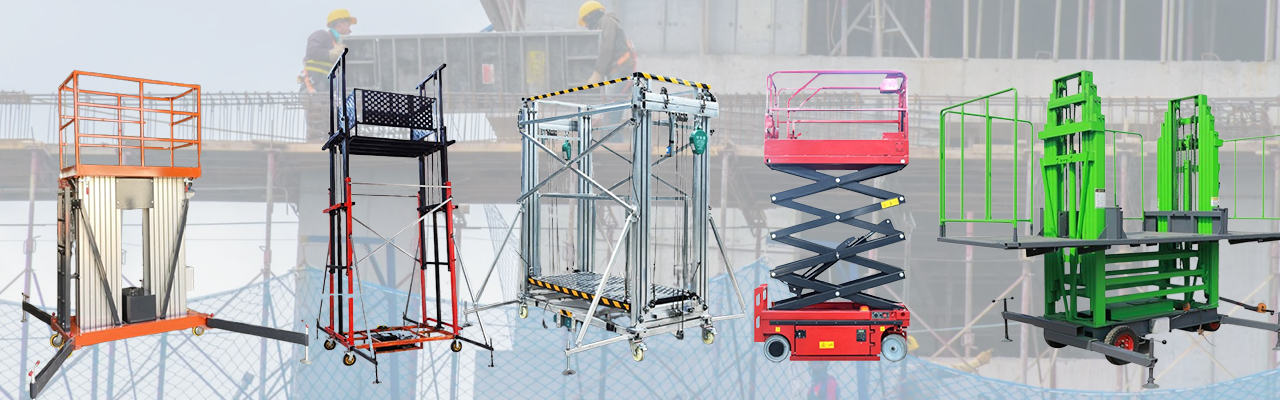
In modern construction projects, the selection of high-altitude aerial work platforms directly impacts both personnel safety and construction efficiency. Faced with a wide array of specifications—ranging from 2 m to 18 m in height and 200 kg to 1,500 kg in load capacity—how does one make a scientifically sound decision? This article provides a reliable checklist to guide your selection process.
Consider the “Limitations” of the Work Environment
When it comes to aerial work platforms, the principle is not “the more powerful, the better,” but rather “the more suitable, the better”:
- Indoor vs. Outdoor
- Indoor / Narrow Aisles: Focus primarily on the equipment’s width. Ensure it can easily fit into standard freight elevators and pass through narrow indoor doorways.
- Outdoor / Rough Terrain: Focus on climbing capability. Verify that the equipment can traverse unpaved surfaces or inclines with stability and confidence.
- Floor Protection
- For finished indoor flooring, it is essential to confirm that the equipment is fitted with non-marking rubber tires to prevent damage to epoxy coatings or marble surfaces.
Core Parameter Assessment: Starting with “Height and Load Capacity”
According to industry data, over 70% of on-site accidents stem from a mismatch between the equipment’s load capacity or height specifications and the actual requirements.
- Platform Height vs. Working Height
- Expert Tip: When selecting equipment, do not focus solely on the “maximum platform height.” The *Working Height* typically equals the platform height plus approximately 2 meters (representing the operator’s reach). For instance, if your construction site requires access at a height of 12 meters, selecting a model with a platform height of 10 meters would be the most appropriate choice.
- Safe Working Load
- Construction sites involve not only workers but also tools and materials.
- Selection Recommendation: If the task requires only two workers and lightweight tools, a load capacity of 200 kg is sufficient. However, if you need to transport heavy mechanical and electrical conduits or curtain wall materials, priority should be given to reinforced platforms with a load capacity of 320 kg or 450 kg.
Addressing Industry Pain Points: Prioritizing Both Efficiency and Safety
Pain Point 1: Project Delays Caused by Frequent Mounting and Dismounting
- Solution: Opt for a Self-Propelled System. Operators can control the equipment’s movement and steering directly from the platform, eliminating the need to lower the platform to reposition the unit. Compared to manually pushing the equipment, this boosts efficiency by 300%.
Pain Point 2: Stability Risks During High-Altitude Operations
- Solution: Focus on Chassis Stability. High-quality scissor lifts are equipped with an automatic pothole protection system and overload sensors. Upon detecting uneven ground or an overload condition, the system automatically restricts lifting operations, ensuring absolute safety and reliability.
Conclusion:
Selecting a lifting platform system is an investment that bears directly upon costs, efficiency, and—above all—safety. By conducting a comprehensive comparative analysis, one can ensure the realization of maximum operational benefits.
With the right tools, working at heights need no longer be hazardous, and project schedules need no longer fall behind.
